News • 7 min read

By Bitpanda
30.12.2025
It has been quite a year for SportFi, the exciting sector that operates at the intersection of sport, fan engagement, and blockchain.
Although institutions continue to drive adoption for leading cryptocurrencies like Bitcoin and Ethereum, sports fans are increasingly interacting with and learning about other types of fungible digital assets known as Fan Tokens, issued by their favourite teams.
The appeal of these tokens, aside from the fact that they are issued by globally renowned sports brands, is that they have real-world utility, furnishing holders with various privileges such as voting rights over certain club decisions and access to unique VIP rewards. In short, Fan Tokens represent a gateway to the world of crypto without requiring a forensic knowledge of Web3 technology.
It has been almost six years since European football royalty blazed the SportFi trail after Juventus ($JUV) and Paris Saint-Germain ($PSG) launched their own official club tokens, assets that were eagerly snapped up by fans and later added to the portfolios of SportFi traders. Fast-forward to 2025, and almost 100 sports institutions have issued their own tokens, among them many more major football clubs, as well as big names from the worlds of mixed martial arts, motorsport, and esports.
In our latest SportFi Roundup, we take a look at how the space continued to mature in the last 12 months.
We cannot review the year in SportFi without touching on the regulatory landscape, which affects all digital assets.
2025 marked a turning point for crypto regulation with the arrival of the GENIUS Act, a federal framework for stablecoins that, among other things, reversed policies that blocked banks from offering crypto services.
The enactment of GENIUS, coupled with the European Union’s Markets in Crypto-Assets (MiCAR) regulation and Hong Kong’s stablecoin framework, means guidance is becoming clearer, and crypto-asset companies are gaining confidence in matters of compliance. Policy shifts are largely pro-innovation, a marked departure from the enforcement-first policy of recent years.
Earlier this year, Socios Europe Services Ltd, part of the Chiliz Group, received authorisation under MiCAR to offer regulated crypto-asset services across the EU. This marked a notable step for the SportFi sector, as platforms focused on Fan Tokens began operating within a clearer regulatory framework. Over the same period, Socios expanded its Fan Token ecosystem with additional utility features, reflecting broader efforts across the industry to align engagement tools with evolving compliance standards.
With clearer regulations and TradFi institutions given the green light to offer crypto services at scale, the cultural mainstreaming of blockchain and digital tokens has accelerated at pace in 2025. Something that could bode well for SportFi and Fan Tokens in the years ahead.
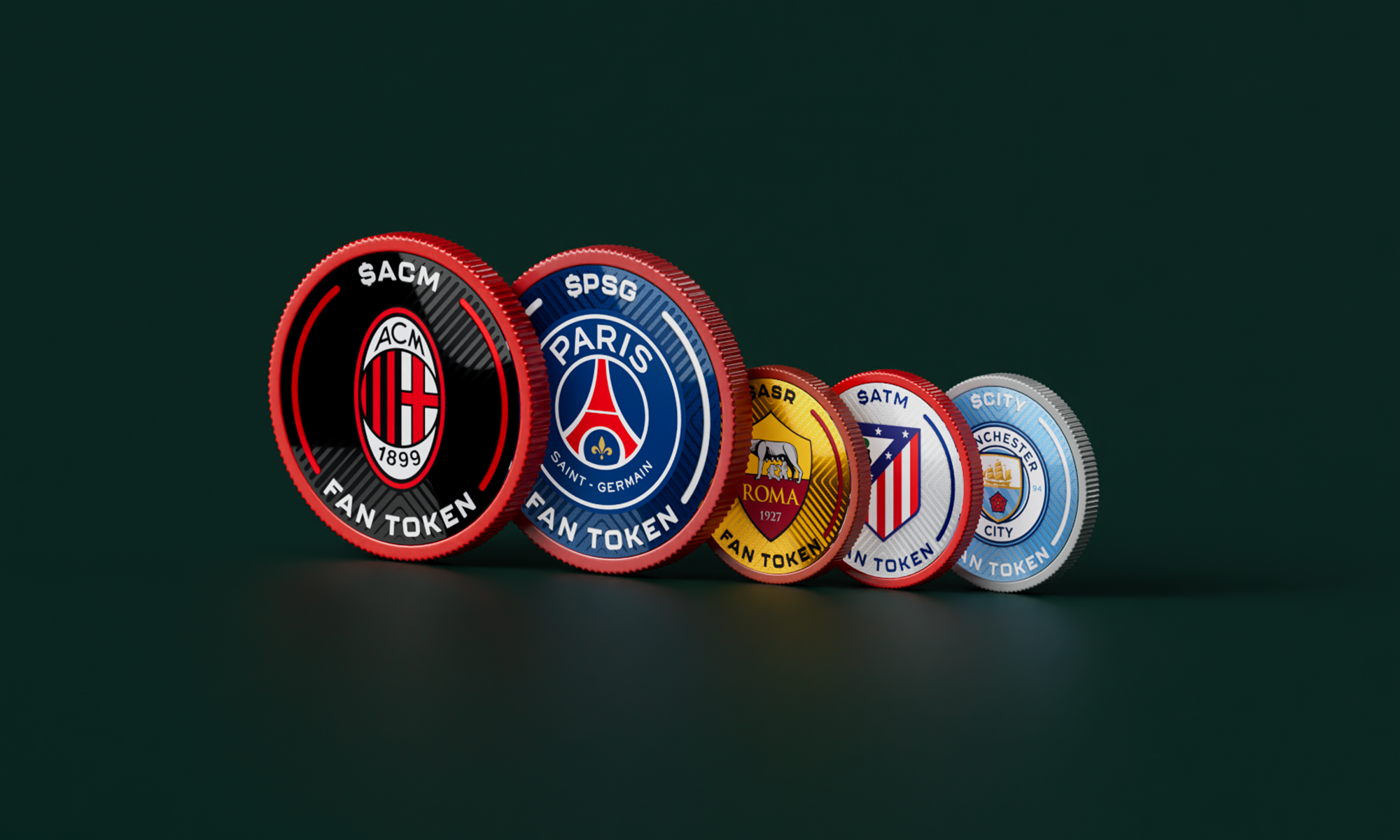
Bitpanda lists Fan Tokens from some of the most well-known clubs in European football, including teams such as Paris Saint-Germain ($PSG), AC Milan ($ACM), Juventus ($JUV), AS Roma ($ASR), Manchester City ($CITY), and Atlético de Madrid ($ATM). Over the past year, these clubs have remained active across both sporting competition and Fan Token engagement initiatives.
Over the last twelve months, the SportFi activity for these clubs has been interesting to say the least. Around the time of their first-ever Champions League title win in May, Paris Saint-Germain announced that it had become the first elite sports club to publicly hold Bitcoin as part of its corporate treasury. Pär Helgosson, Head of PSG Labs, also said Fan Tokens were at “the very core” of the club’s Web3 strategy and committed to “fostering a new level of innovation stretching beyond just fan engagement.”
This year, the club granted $PSG token holders an array of benefits, as they got to fly with the team to Lisbon and Bilbao, attend training sessions, vote on the armband worn by captain Marquinhos, and even play under the stadium lights at the Parc des Princes.
Meanwhile, one of the year’s more closely watched SportFi developments emerged earlier this month, when Tether, issuer of the USDT stablecoin, publicly expressed interest in increasing its stake in Juventus. Comments regarding a potential investment to support the club were followed by a period of heightened trading activity in the Juventus Fan Token, reflecting broader market sensitivity to high-profile developments within the SportFi ecosystem.
Tether is already among Juventus’ largest shareholders, a position that has drawn additional attention to the intersection of major crypto-asset issuers and established sports organisations.
This season, Juventus has developed a series of attractive experiences for Fan Token holders, most notably an opportunity to enjoy a private hotel meet-and-greet with players before the Napoli game on Dec. 7. Other perks have included early ticket access, signed jerseys, and VIP Skybox seats to enjoy games in a premium setting.
2025 has undoubtedly seen Fan Token clubs innovate in terms of their rewards and experiences, in a bid to outshine the competition. While some lucky AC Milan Fan Token holders got to travel with the team to games against Juventus and Real Madrid, twelve $CITY holders watched Manchester City’s recent win over Real Madrid from the first-team dressing room, where they were also served dinner.
Other money-can’t-buy activations included a Player Analysis Experience wherein two Atlético de Madrid Fan Token holders joined the club’s analysis team to track last month’s match with Oviedo, both pre-kickoff and during the 90 minutes. $ATM holders also chose the official team bus design.
Over the years, there have been several million votes recorded using’ Fan Tokens, and tens of thousands of unique rewards and experiences redeemed. It’s fair to say that on-chain data shows this high level of fan engagement has remained consistent throughout 2025.
A range of factors can influence market activity, including club-specific developments, broader crypto-asset sentiment, and prevailing market conditions. In that context, 2025 has been characterised by periods of volatility, with market corrections occurring alongside continued institutional engagement and ongoing regulatory developments across multiple jurisdictions. At the same time, activity across decentralised finance and other blockchain-based use cases has continued to evolve, underlining the mixed and often uneven nature of progress within the wider digital asset ecosystem.
Throughout 2025, Fan Tokens listed on Bitpanda experienced fluctuating levels of market activity, reflecting both club-specific developments and wider crypto-asset conditions. Periods of increased attention often coincided with major sporting milestones or high-profile announcements, while quieter phases mirrored broader market consolidation. These patterns underline the dynamic nature of Fan Tokens, which sit at the intersection of fan engagement, market sentiment, and the wider digital asset ecosystem.
So, what can we expect from SportFi in 2026? If clubs’ pledges ring true, certainly wider and better fan engagement initiatives, as organisations seek to build stronger connections with their global fan bases and drive further adoption among the mainstream. SportFi will continue adding to the fan experience in new and interesting ways.
As with other crypto-assets, Fan Tokens remain subject to changing market conditions and shifts in sentiment. Their development will continue to be influenced by a combination of sporting performance, organisational decisions, and broader market dynamics. While football remains the most established SportFi use case, interest from other sports organisations continues to be monitored as the sector evolves.
Elsewhere, developments within the Chiliz ecosystem point to emerging approaches to sports-related financing, including models that explore the tokenisation of future receivables, such as broadcasting rights, within on-chain frameworks. While still at an early stage, these initiatives illustrate how blockchain-based infrastructure continues to be tested across different aspects of the sports industry.
Looking ahead, 2026 will see the next FIFA World Cup hosted across the United States, Canada, and Mexico. A number of national teams already have associated Fan Tokens, and the tournament is likely to draw renewed attention to digital fan engagement initiatives alongside traditional sponsorship and media activity.
With the final whistle set to sound in 2025, the beautiful game’s blockchain story is only just getting started.
Disclaimer
This article is distributed for informational purposes, and it is not to be construed as an offer or recommendation. It does not constitute and cannot replace investment advice.
Bitpanda does not make any representations or warranties as to the accuracy and completeness of any information contained herein.
Investing carries risks. You could lose all the money you invest.
We use cookies to optimise our services. Learn more
The information we collect is used by us as part of our EU-wide activities. Cookie settings
As the name would suggest, some cookies on our website are essential. They are necessary to remember your settings when using Bitpanda, (such as privacy or language settings), to protect the platform from attacks, or simply to stay logged in after you originally log in. You have the option to refuse, block or delete them, but this will significantly affect your experience using the website and not all our services will be available to you.
We use such cookies and similar technologies to collect information as users browse our website to help us better understand how it is used and then improve our services accordingly. It also helps us measure the overall performance of our website. We receive the date that this generates on an aggregated and anonymous basis. Blocking these cookies and tools does not affect the way our services work, but it does make it much harder for us to improve your experience.
These cookies are used to provide you with adverts relevant to Bitpanda. The tools for this are usually provided by third parties. With the help of these cookies and such third parties, we can ensure for example, that you don’t see the same ad more than once and that the advertisements are tailored to your interests. We can also use these technologies to measure the success of our marketing campaigns. Blocking these cookies and similar technologies does not generally affect the way our services work. Please note, however, that while you’ll still see advertisements about Bitpanda on websites, the adverts will no longer be personalised for you.